Lotería vs bingo: same race to a full card, very different game
Call Lotería “Mexican bingo” and you are about eighty percent right, which is exactly why the other twenty percent matters. Both games are a race to fill a card while someone calls things out. What gets called, and how, changes everything.
What the two games share
Strip both games down and you get the same skeleton. Every player holds a card with a random selection of items. A caller draws items one at a time from a fixed set, with no repeats. Players mark what they hear. The first person to complete the agreed pattern shouts, the caller checks the claim, and the round ends. Nobody makes decisions; you just have to pay attention. That is why both work at a family table with five-year-olds and eighty-year-olds playing on equal terms.
Both even come from the same place. Lotería descends from the Italian lotto games that crossed to Spain and then to New Spain in the colonial era; bingo grew out of the same family of number lotteries and took its modern form in the United States in the twentieth century. Cousins, not strangers.
Where they part ways
| Lotería | Bingo | |
|---|---|---|
| What is called | 54 picture cards, each with a name | Numbered balls: 75 (US) or 90 (UK) |
| Player’s card | A tabla, usually 4×4 = 16 pictures | 5×5 grid with a free center (US) or a 3×9 ticket with 15 numbers (UK) |
| How it is called | Sung, often with a rhyming verse before the name | Read out: “B-12”, or UK nicknames like “legs eleven” |
| Winning shapes | Line (chorro), four corners, center, full board | Lines, patterns, full house / blackout |
| Markers | Dried beans, coins, bottle caps | Daubers, chips, pens |
| The shout | ¡Lotería! (or ¡Buenas!) | Bingo! (or House!) |
| Typical setting | Family tables, fairs, posadas, classrooms | Halls, churches, fundraisers, apps |
| Prizes | Usually a pile of beans or small change, often nothing | Often cash or prizes, many cards per player |
Pictures change who can play
A number means nothing until you find it. A picture means something the moment you hear it. A four-year-old who can’t read “B-12” can absolutely find El Gallo, and a grandparent who lost track of the last three numbers will still remember the rooster. That is why Lotería lives in classrooms and on family tables while bingo leans toward halls with prizes. It is also why Lotería is such a good first game for kids learning Spanish: the vocabulary arrives with a drawing attached, see Lotería in Spanish class.
Pictures also make the deck smaller. Fifty-four cards on a sixteen-square tabla means each card has a decent chance of being yours, so the board fills steadily and the tension builds from the first call. In 75-ball bingo you can sit through long stretches with nothing to mark.
The caller is a performer, not a reader
A bingo caller reads numbers clearly. A Lotería cantor sings. The classic move is a short verse before the name, a one-line riddle the table tries to solve before the answer lands. UK bingo has a cousin of this in its number nicknames, but in Lotería the verse is the game: families keep their own, kids memorize them, and a good cantor is the reason people stay for one more round. We wrote a short verse for every card in our Lotería card list.
Things people get wrong
- “Lotería is a lottery.” The word means lottery, but nothing is bought and nothing is drawn by a state. It is a parlor game, closer to bingo than to a lottery ticket.
- “You need the exact traditional deck.” You don’t. Schools, families and artists make their own decks all the time; what matters is 54 distinct pictures and a caller who knows them.
- “Lotería is for kids.” Kids love it, but the verses and the trash talk are aimed at adults. Watch any family table on Día de Muertos.
- “Bingo and Lotería use the same cards.” They can’t: one card is numbers in fixed columns, the other is pictures in any order.
Which one should you play?
- Mixed ages, family gathering, Spanish speakers in the room: Lotería. Pictures level the field, and the verses give everyone a role.
- A big crowd, prizes, a fundraiser: bingo. Numbers scale to hundreds of cards, and halls already have the equipment.
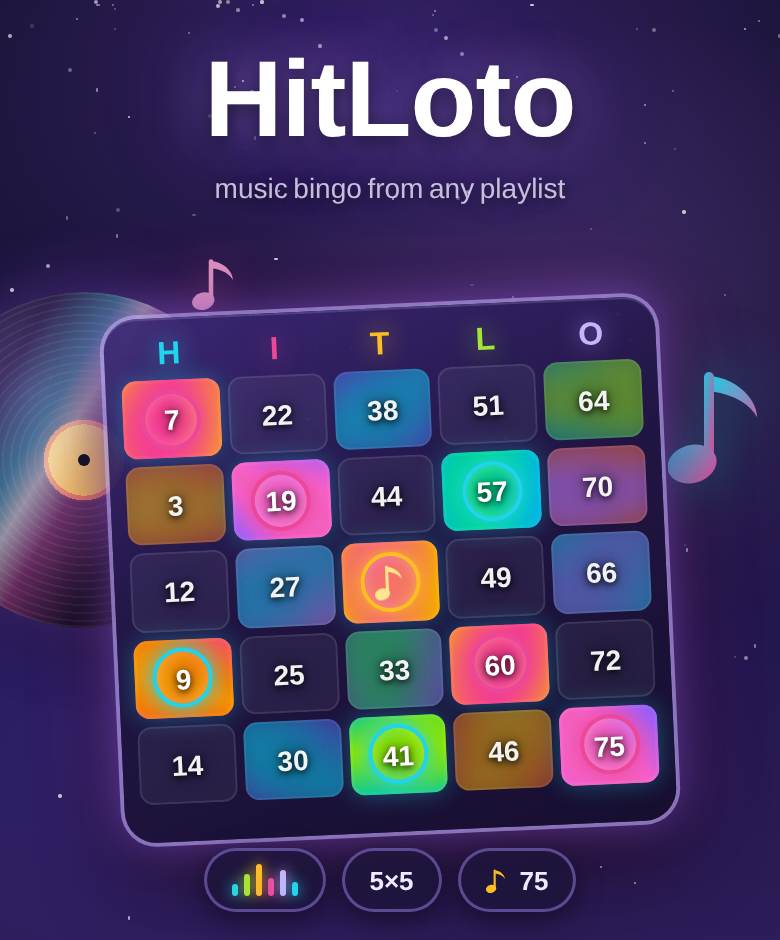
- A party where people want to sing along: music bingo, where songs replace numbers — our HitLoto plays it on a TV, and there is a full guide to music bingo parties.
- A long-distance family on a video call: Lotería online, with a relative singing the verses. Setup is in virtual Lotería on Zoom.
Playing Lotería online, bingo-style convenience included
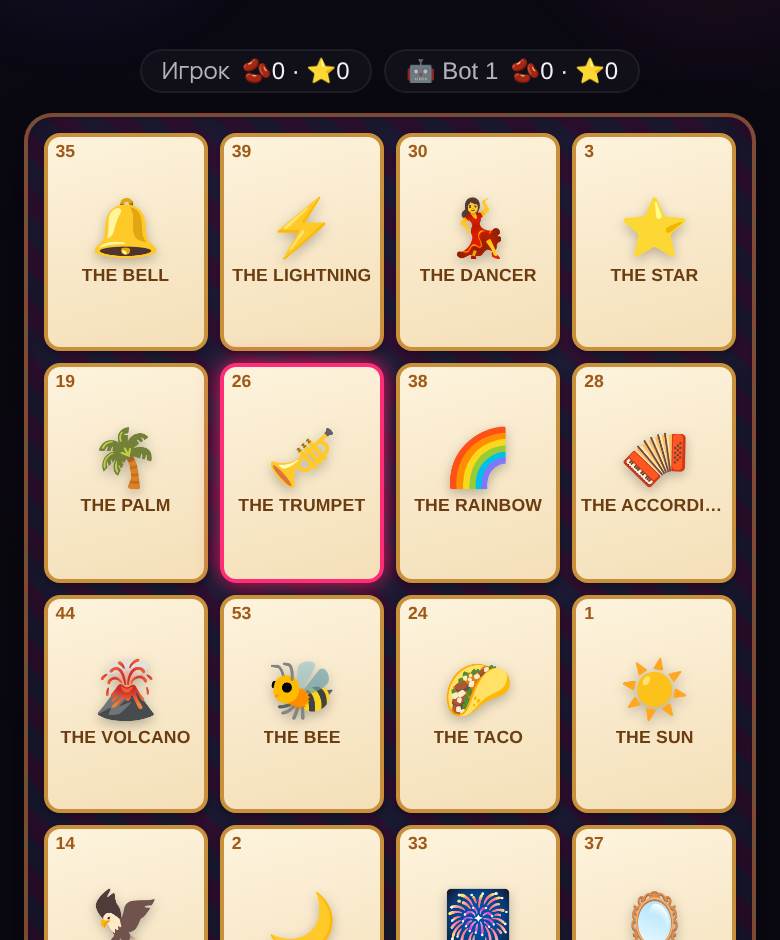
Our Lotería online borrows the one thing bingo apps do well: the machine draws, and the machine checks. Each player gets a random 4×4 tabla, a new card appears every four seconds, and a shout of ¡LOTERÍA! is verified square by square. Our version plays full board only, with 2 to 40 players per room and bots if you are short. The full rules, settings and tips are in how to play Lotería online, and the drawing side is explained in the online Lotería caller.
Prefer cardboard? Print tablas from the printable Lotería page and let a human caller run the deck.
FAQ
Is Lotería the same as bingo?
No, though they are related. Both are races to complete a card while a caller draws items, but Lotería uses 54 picture cards sung by a caller, while bingo uses 75 or 90 numbered balls read out.
Why is Lotería called Mexican bingo?
Because it is the closest thing most English speakers know: a card, a caller and a shout at the end. The name stuck in the US even though the game is older than modern bingo.
How many cards are in Lotería compared with bingo balls?
Lotería has 54 cards. American bingo uses 75 balls and British bingo uses 90.
Can you play Lotería with bingo rules?
Mostly yes: a line, four corners or a full board all exist in both. What you lose with pure bingo rules is the singing, which is the part people remember.
🌵 Play Lotería right now
Against a bot, no sign-up — your first game in a couple of minutes
More about Lotería · Browse all 40 games · Online party games with friends