Which board games actually survive a 6-inch screen
Half the board games out there turn into pinch-zoom misery on a phone. The other half play fine one-handed on a crowded train. Here is how to tell them apart.
Why some board games survive a phone and others don't
The test is simple: how many objects have to be on screen at once, and how precisely does your finger have to land on them. Dominoes with seven tiles in hand and a dozen on the table is fine. A game with a hundred-tile map where you also need to squint at whose meeple that is — not fine. You will spend half the game zooming, and there will be no second half, because everyone left.
The other factor is turn length. Five to ten seconds per turn and the game keeps its rhythm. Forty seconds of resource math per turn and somebody switches tabs, disappears into a group chat and comes back three minutes later asking whose turn it is. That is the real reason online Monopoly night ends with two people finishing and three quietly gone.
- Works on a phone: a board 8×8 or smaller, a hand of up to 10 cards, one obvious action per turn.
- Doesn't: hex maps, hidden zones that rely on hover, dragging small pieces precisely, walls of rules text mid-game.
What a good mobile implementation has to do
Whether a board game plays well on a phone is about 70% interface and 30% game. Checkers can be built so you miss the square three times in a row, or built so you hit it without looking. Here is the checklist worth judging any service by:
- Portrait by default. Nobody is turning their phone sideways on a bus.
- Tap targets no smaller than a fingertip — roughly 44 pixels. Squares and tiles should forgive a couple of millimetres.
- Reconnect without losing the game. Lifts, tunnels, dead spots — connections drop constantly, and the game has to restore the state instead of dumping you out of the room.
- No install. Downloading an app for one game with a friend is the most reliable way to never play that game.
- Join by link or a short code, so inviting someone takes ten seconds in whatever chat you already use.
Those last two are most of the reason browser board games beat app stores for casual play — we went deeper on that format in the piece on games you join by link with no signup.
The ones that genuinely play well on a phone
We built portrait layouts on purpose instead of shrinking desktop ones. Five modes that pass the 6-inch test:
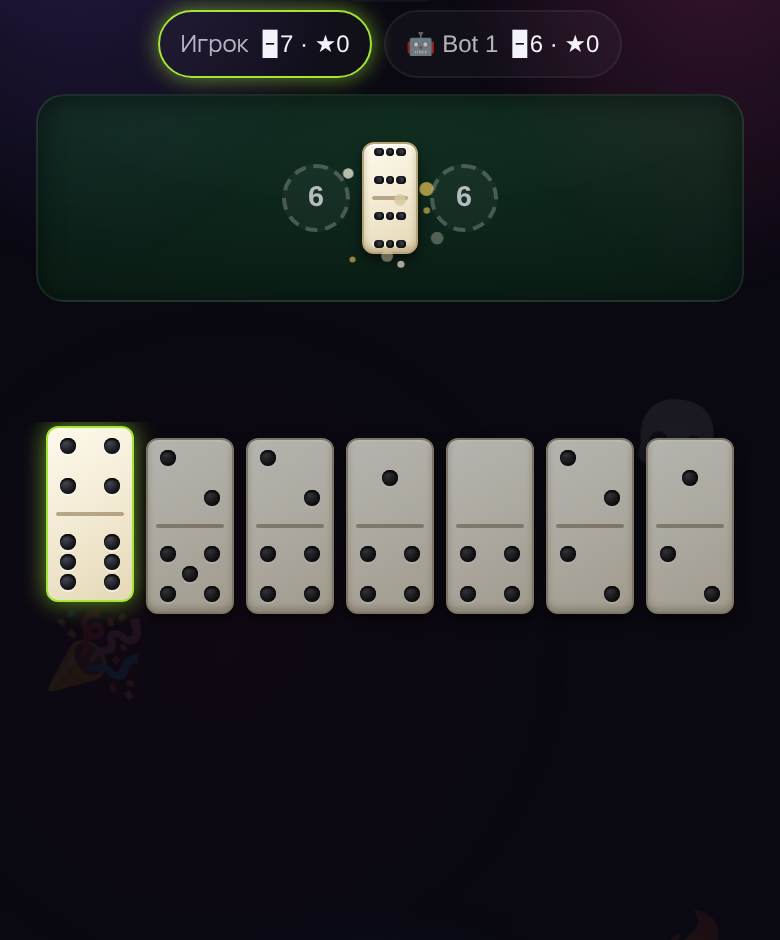
- Dominoes — block dominoes for 2–4 players, 28 tiles. Your hand fits in one row at the bottom, legal moves are highlighted, a game runs 8–12 minutes. The perfect phone candidate.
- Ludo — a race for 2–4. One tap to roll, one tap to pick a token. A kid gets it in a minute, and an adult will swear at the dice exactly as loudly as at a real table.
- Backgammon — short backgammon, one on one. The only dense board here, so the points are drawn wide and moves are confirmed with a separate gesture.
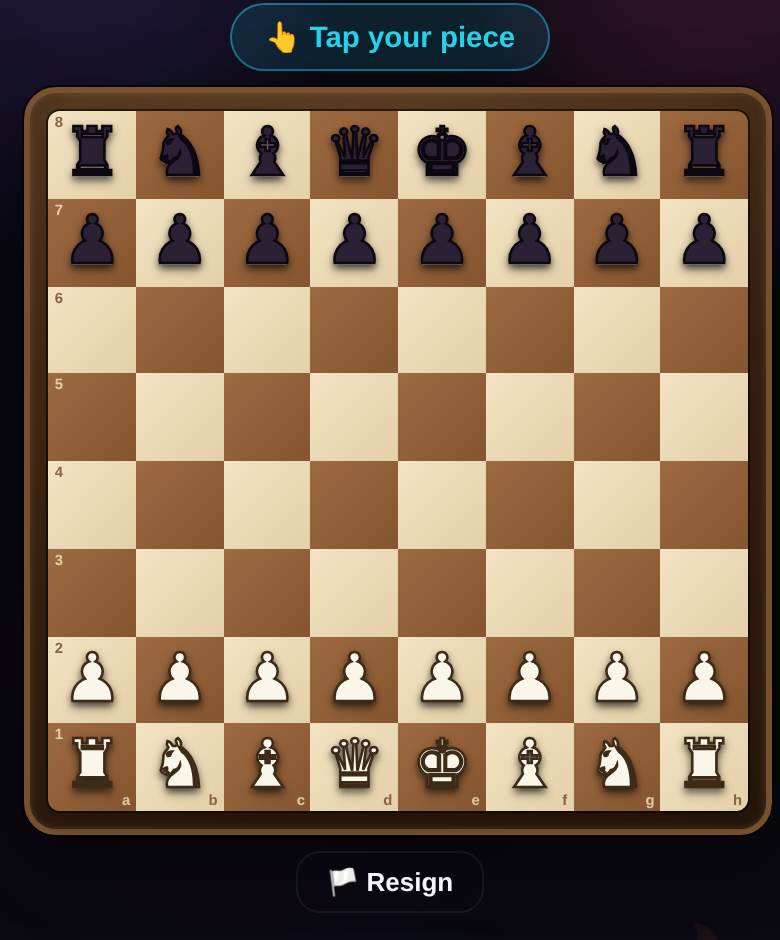
- Checkers — Russian rules, 8×8. Mandatory captures are enforced by the server, so there is nothing to argue about.
- Lotería — the Mexican picture bingo, great with a crowd: the card is large and a player only ever taps one image.
How much data a game actually uses
Less than you would guess. A browser board game only sends events over the wire — tile played, moved 4, dice rolled. That is hundreds of bytes per turn, not megabytes. A full game of dominoes or checkers lands around 100–300 KB including the first load of images and fonts, and coming back the same day costs almost nothing because the assets are already cached.
For scale: one minute of social video is 5–15 MB. The data from a single scrolled reel buys you an entire evening of board games. On a 1 GB monthly plan you will run out of patience long before you run out of gigabytes.
Playing on the move without losing to a tunnel
The classic mobile fear is dropping out mid-game. Room state lives on the server here, not in your tab: if the connection dies, the tab reconnects on its own and restores the board, your hand and the turn order. You come back exactly where you left.
Practical tip for commutes: pick turn-based games with no shared clock. Dominoes, checkers and backgammon happily absorb a ninety-second gap, because the table is waiting for you anyway. Anything where a timer ticks for everyone at once is better saved for a proper Wi-Fi moment — we listed a few of those short formats in the roundup of 5–10 minute games.
🁢 Play Dominoes right now
10 seconds from click to game. No sign-up, nothing to install.
Play free now