What actually fits into three, five and fifteen minutes
A break is rarely as long as the timetable claims. So these games are sorted by minutes rather than genre, and each one honestly fits its shelf.
Count the minutes honestly first
A school break is fifteen minutes, three of which go to the corridor and the queue. A work break is "twenty", except people start messaging you five minutes before it ends. The real budget is almost always a third smaller than advertised, and the game has to end before the patience does.
So what follows is sorted by length rather than genre: three shelves, for three minutes, five minutes and fifteen. Nothing on the first shelf will ever demand "hang on, we are mid-game".
One to three minutes: one tab, one opponent
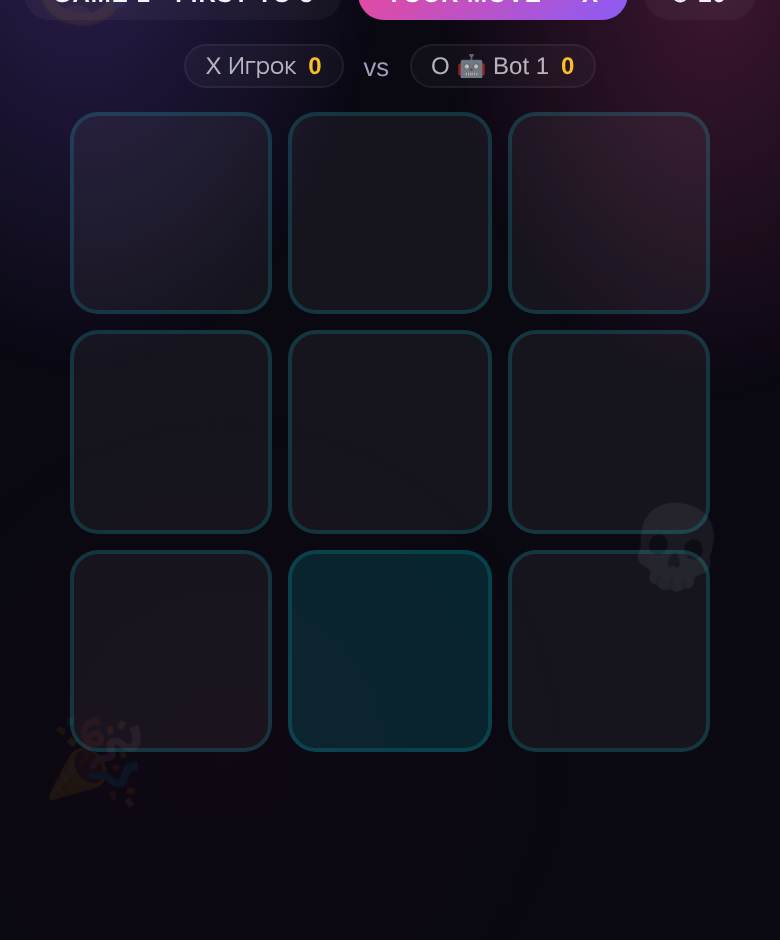
Tic-Tac-Toe is the only thing that genuinely fits between the bell and the classroom. A round takes under a minute, the series runs to three wins, and the loser of each round opens the next one, which evens things out more than you would expect. Turns are capped at thirty seconds, so nobody can stall away the entire break.
If your opponent is still on the stairs, add a bot. It plays minimax with a deliberate human-shaped slip about one move in seven — beatable, but not while yawning.
Five minutes: coffee cold, game still on
Battleship on the classic 10×10 grid: ten ships, none of them touching, not even at the corners, and a hit earns you another shot. Forty-five seconds a turn. Five minutes usually gets you to the part where one player is hunting the last single-cell ship and the other is insisting that is statistically impossible.
Sudoku Duel is ordinary sudoku with one twist: you and your opponent solve the same grid at the same time and watch each other’s progress live. Finishing correctly first takes the big points, every correct cell pays one along the way, and you get three hints per match. Ideal when you want competition without conversation.
Ten to fifteen minutes: an actual break
A real break has room for games where the talking around the table matters as much as the result.
- OCHO! — fast card shedding across 108 cards: colours, skips, reverses, draw-twos and wilds. Play your second-to-last card and you must shout "OCHO!" or get caught and pick up a two-card penalty. Up to eight players.
- Dominoes — twenty-eight tiles, highest double leads, no boneyard: you are dealt your hand and you play it. Seven tiles each with two players, five each with three or four.
- ¡Basta! — a random letter, five categories, seventy-five seconds to fill them in. Finish all five and hit ¡BASTA!, which leaves everyone else ten seconds. A word nobody else wrote scores ten; a duplicate scores five. Loudest entry on the list.
Why any of this opens in ten seconds
- Open the game, get a four-letter code.
- Paste the code or the link into the class chat or the work channel.
- Whoever opens it types a name and plays. No signup, no email, no install.
You can close the tab whenever you need to. If a manager materialises behind you, the match does not evaporate — reopen the link and you are back in the same position with the same cards and the same board. If your partner never showed up, fill the seats with bots and start without them. More about rooms like these in games you join by link, no signup.
How not to overrun your own break
- Set a timer on your phone instead of promising yourself "one more". One more is never one.
- Pick the game to fit the time left, not the other way around. Four minutes left means noughts and crosses, not dominoes.
- Play standing up on your phone. Sitting down at a desk reliably doubles the length of any break.
- Agree upfront that the score carries over to tomorrow. An unfinished series is a much better reason to come back than a finished one.
Why a first-to-three series beats a single game
One short game is almost always decided by an accident: who moved first, who drew the convenient layout. The loser walks off feeling cheated and the break ends on a sour note.
A first-to-three series costs four or five minutes instead of one, and in that window the interesting thing finally happens: somebody claws back from 0-2, somebody changes tactics after the second loss, and the final score starts to resemble the truth. A series also stops itself at the right moment, which is more than can be said for "just one more".
⭕ Play Tic-Tac-Toe right now
10 seconds from click to game. No sign-up, nothing to install.
Play free now