What to play together when you are half a continent apart
Long-distance calls break the same way for everyone: you have four minutes of actual news and an hour you want to spend together. A game fixes that not by being fun, but by giving the conversation something to lean on.
What actually wears out
The first months apart run on plot: the move, the new job, the next visit. Then the plot runs out and what is left is a nightly call where you have both covered lunch and are looking at each other in silence. Nothing is wrong with you — a conversation with no shared context just runs dry.
Time zones are the second problem. Monday morning for one of you, Sunday evening for the other; one is sharp, the other barely keeping their eyes open. The overlapping window is maybe ninety minutes a day, and spending it on "so, how was your day" feels like a waste.
Watching the same show in two apartments feels shared, but it is really two hours facing the same direction in silence. Pleasant, sure. Shared, barely.
Together is not the same as in parallel
A shared activity works when what one person does changes what the other sees. That is the difference between playing something and scrolling separately with the call left open.
Which gives you a filter: starts in under a minute, runs on a phone, does not require both of you to be equally awake. Anything with a launcher, a five-gigabyte download and a settings menu rarely survives to the second evening.
The best one: write a story together
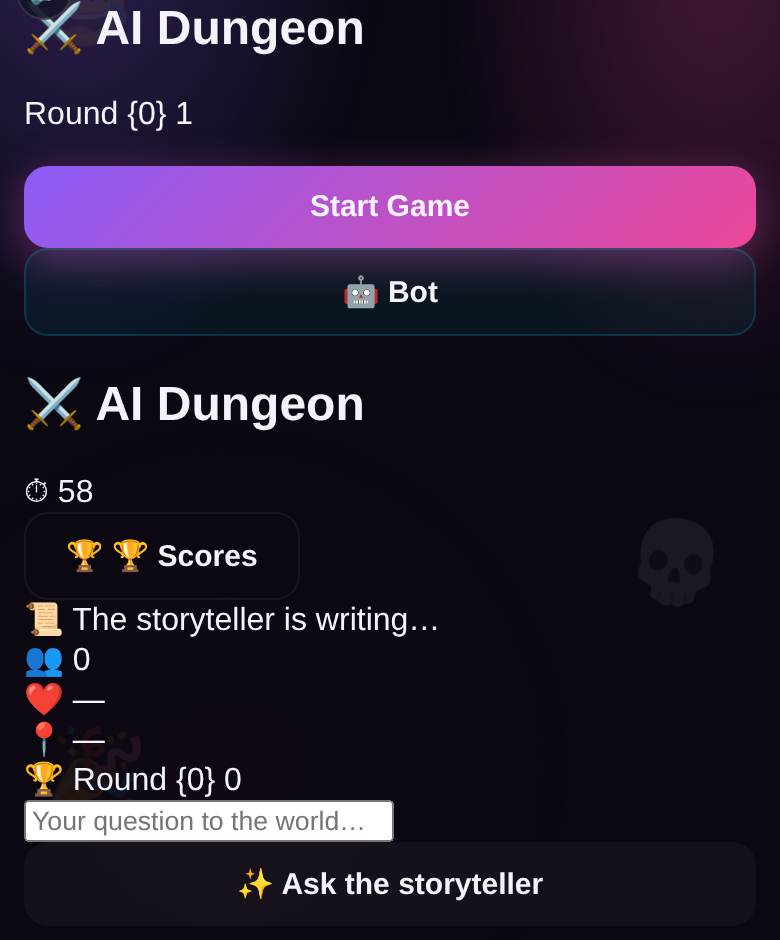
The best thing two people can do online is build something rather than compete. Hence AI Dungeon Master at the top: a text adventure where the AI runs the story and you two write what your characters do. No score, no loser.
The AI describes a scene — an abandoned station, a night market, a letter nobody should have opened — and you answer in plain sentences with what you are doing. The story grows out of your decisions, including the stupid ones. Half an hour later you have burned down a tavern, adopted a goose and gone into debt to a cult.
The value is not the plot. It is the shared memory: inside jokes, characters with names, "remember that guard." That is the real shortage in a long-distance relationship — not conversation, but stories you both own.
Long games as a ritual
Next: games nobody has to re-explain, where the repetition is the point. Chess is underrated for couples. It moves slowly, you can talk about anything between moves, and that is the pace at which a conversation flows on its own. Legal moves are highlighted, so a gap in experience does not become humiliation. Duel games do earn Elo, but it lives on a separate rating page — none of it shows up on the board.
Backgammon has the opposite temperament. The dice inject enough chaos that losing offends nobody, while still producing plenty of loud accusations per evening. Good with tea, and good when one of you sleeps in twenty minutes.
Five minutes before bed
Not every evening holds an hour-long game. For nights when all you have is "hi, I survived," go short.
- Sudoku Duel — one grid, two people, whoever fills cells faster. Five minutes, hardly any talking, and you are still doing it together.
- Battleship — fifteen minutes and genuine confusion about how she found the four-cell ship on the second shot again.
- Pictioner — one of you draws with a finger, the other guesses. Zero artistic merit, a week of material.
They share one property: you can abandon them mid-game when someone falls asleep. No progress worth protecting means no guilt about dozing off.
A schedule, and a seven-hour gap
Game night works better booked than improvised. One fixed slot a week — Wednesday, half an hour — survives for months. A vague "let's do this sometime" rarely survives two.
With seven hours between you there is usually one usable window: early morning on one end, late evening on the other. Do not cram a long game into it. Take a short one, agree who is bending this time, then alternate. Otherwise the same person always plays exhausted and quietly keeps score about it.
One technical thing: do not share your screen. Streaming a tab over a call gives lag, a blurry picture and one shared cursor — one of you plays, the other watches a broadcast. Each opens their own tab, call alongside; then you are both players. Setup details in the guide to games for video calls.
Keeping it from turning into a contest
Two-player games slide into arguing-by-other-means faster than you would think. Rules that stop it:
- Alternate cooperative and competitive. Two duels back to back and the evening becomes about the score.
- Do not keep a lifetime tally. A best-of-three within one evening is fine. A spreadsheet since March is not.
- The stronger player does not comment on the other's moves until asked. "Why would you go there" ruins an evening faster than any lag.
- If either of you gets irritated, close the tab without debate. The game was there for the mood; if the mood went, it failed its one job.
And sometimes it helps to invite other people. If you have friends in common, pull them into Meme Party or Pictioner — they join by link, no account, from any phone. Laughing at the same picture in a group of four is also being together; options in the roundup of games with friends online.
⚔️ Play AI Dungeon Master right now
10 seconds from click to game. No sign-up, nothing to install.
Play free now