How to keep a video call alive: games that actually work
On a ten-person call, three people talk and the other seven turn into muted grey squares. A game in a second tab fixes that faster than any icebreaker about sharing a fun fact.
What actually breaks on a call
Three problems, and none of them are about the people. First, latency. Even 300 milliseconds turns any game built on speed and interruption into mush: two people start talking, both stop, repeat.
Second, the silent majority. The more participants, the higher the cost of speaking up — unmute, find a gap, do not talk over anyone. Seven people reasonably decide to wait, and twenty minutes later the call is carried by the two loudest.
Third, screen sharing. It compresses the image, runs a second or two behind, eats the bandwidth your video needed, and on a phone it renders an unreadable rectangle. Worse, whoever is sharing stops being a player and becomes the projectionist.
A second tab beats a shared screen
The setup that works: the call stays a call — faces and voices — and the game opens in a separate tab for each person. The host drops a link into the call chat (Zoom, Meet and Discord all have one), people tap it, and everyone gets their own board at full resolution.
What you gain: private hands nobody can peek at, no lag because only moves cross the network instead of a video stream, phones that work as well as laptops, and a host who plays along instead of operating a slideshow.
Sorted by group size
3 to 4 people
Small enough for games with conversation in them: everyone gets to talk, nobody has to fight for the floor. Associations works well (the storyteller gives a clue for their picture, everyone else submits a lookalike and votes), and so does Dominoes — hands busy, mouth free, the chat keeps going.
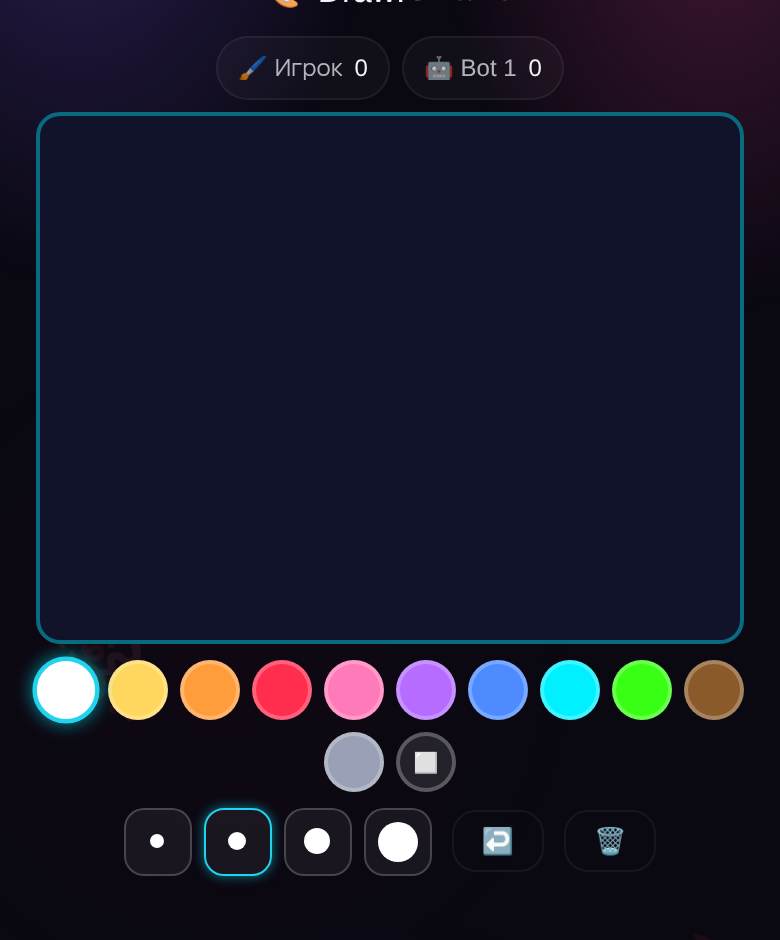
Four is also the sweet spot for Pictioner: one person draws while three shout guesses into the mic instead of typing them. On a call that is the better version of the game — you get to hear someone talk themselves into the wrong answer.
5 to 8 people
The size where turn order starts to hurt. Pick games where everyone acts at the same time.
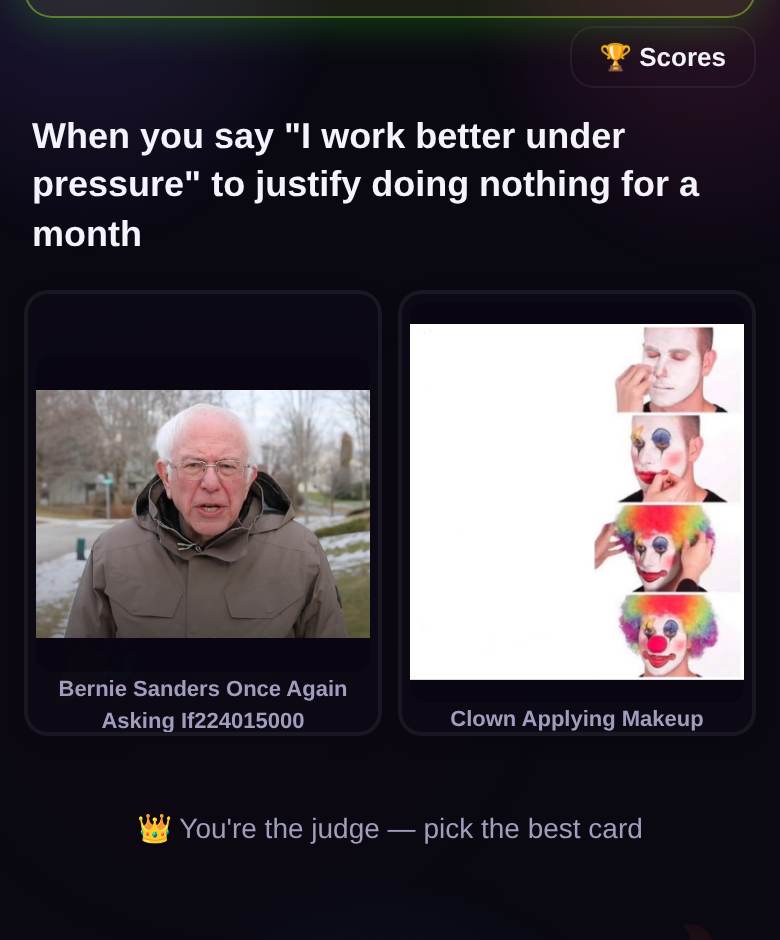
- Meme Party — the judge of the round reads the prompt out loud, everyone submits an image, and the judge picks the winner. The judge role moves on every round. Twenty to thirty minutes, and half the punchlines end up quoted in the team channel for weeks.
- Basta! — one letter, five categories, seventy-five seconds a round. Great with work teams: the quietest person on the call will suddenly argue hard about whether "Jamaica" counts.
- OCHO! — card shedding, 8 to 12 minutes a game, and yes, people do shout "OCHO!" straight into the microphone.
10 or more
Big calls are their own genre. Voice discussion with ten people simply does not work, so you either want silent simultaneous play or a split. Lotería holds a big group, up to 8 players per room: the game calls card after card on a four-second beat while everyone marks their own 4×4 tabla. Option two is breakout rooms of five or six running parallel games, then comparing results. Option three is a Tournament bracket for 3–8 players while everyone else watches and heckles.
Timings: the coffee break and the long night
A fifteen-minute break in the middle of a working call is the most common and most wasted slot. Exactly one thing fits: two rounds of Basta!, or a quick best-of-three between two volunteers while everyone else refills coffee. Do not start a card game if someone has to leave in fifteen minutes — an abandoned hand feels worse than no game at all.
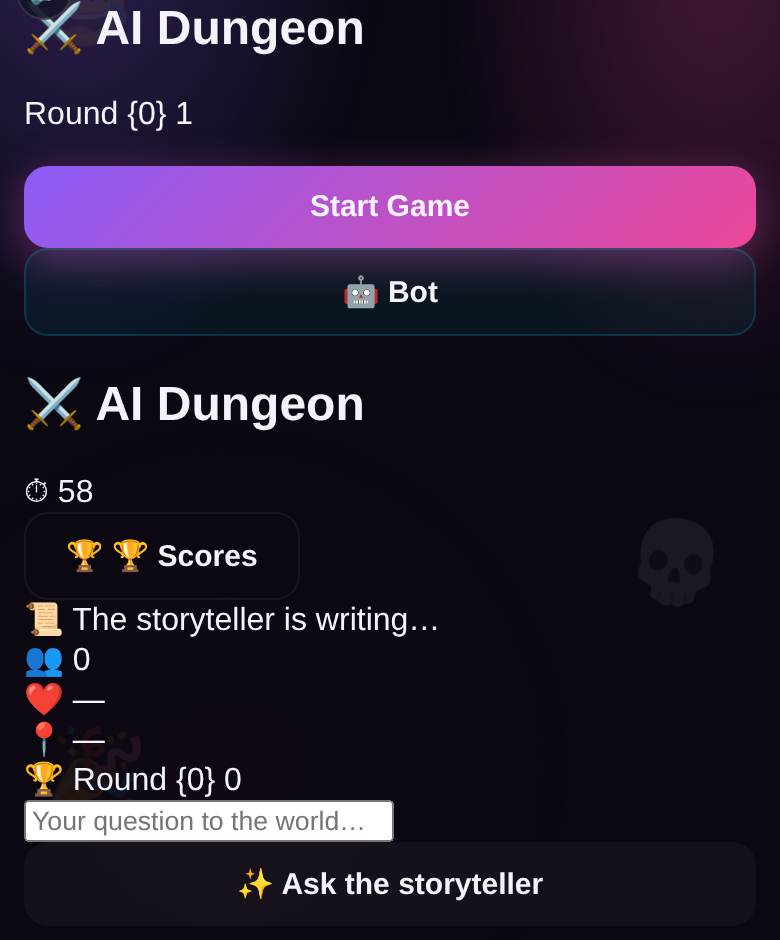
A two-hour night is built differently. First twenty minutes: something simple while stragglers arrive (drawing, OCHO!). Then an hour on the main course — memes, associations, or AI Dungeon Master, where an AI runs the story and you type what your character does. Last twenty minutes: short duels for whoever is still around. General rule — no single game past the forty-minute mark, or people start disappearing without saying goodbye.
If you are the one running it
- Choose the game before the call starts. Deciding by committee with eight people costs ten minutes and most of the mood.
- Create the room first and post the link in the call chat as one message. Read the four-letter code out loud too — someone will not find the chat.
- Explain the rules in one sentence and start. Learning while playing is faster than any briefing.
- Narrate what is happening: "everyone has submitted, we are voting now." Nobody can see anyone else's screen, so people lose the thread easily.
- Fill empty seats with bots rather than waiting more than a minute for a no-show.
- Stop while it is still fun. The best moment to end is right after a round that made everyone laugh.
Keep a backup game in your pocket in case the first one falls flat — it happens to everyone. A full menu by situation is in what to play with friends online, and how to hand out a link so nobody stalls on a sign-up form is covered in the no-sign-up guide.
🎨 Play Pictioner right now
10 seconds from click to game. No sign-up, nothing to install.
Play free now