Draw and guess, the browser version
Sketching a word while friends yell wrong answers is a game-night staple; the best-known boxed version came out of Seattle in 1985. Pictioner puts it on everyone’s screen: one player draws a secret word with a finger or mouse, every stroke shows up live on the other phones, and the rest race to type the answer.
Drawing skill barely matters: a lopsided giraffe the whole group reads as a floor lamp gets the biggest laugh. No paper, timer or word cards needed — the game hands out the word, runs the clock and keeps score.
How a round works
- Players take turns as the artist; bots never draw.
- The artist gets one secret word. There is no pick-from-three and no skip button.
- The artist has 70 seconds. Guessers see the word’s length and first letter right away; a middle letter appears with 35 seconds left, and the last letter in the final quarter.
- Wrong guesses scroll by for everyone; a correct one shows only as “guessed the word!”, so nobody can copy it.
- Then come 15 extra seconds for last guesses. If everyone gets it, the round ends at once.
- Scoring: +2 for each correct guesser, +1 to the artist per correct guesser, and a +2 artist bonus when every guesser gets it (needs at least two guessers).
- The first player at 5 points when a round ends wins the match.
Play online with friends — free, no sign-up
Create a room and you get a link plus a 4-character code of letters and digits. Drop the link in the group chat; friends tap it on a phone or laptop, type a nickname and land in the lobby. No accounts, no download, nothing to pay.
- 2 to 10 players per room; bots fill empty seats.
- Words come in the language the host uses on the site: an English room draws English words.
- A running match can’t be joined, so gather everyone before the start. If someone’s Wi-Fi drops, reopening the link puts them back in, drawing included.
- After the podium, the host gets a Rematch button: same group, scores reset.
- Big screen: the host taps “Open the screen” in the lobby, or the TV opens /tv and enters the code. It shows the live canvas, timer, letter blanks and who has guessed — never the word.
Word themes, and how this differs from other draw-and-guess sites
The host picks a theme: Animals, Objects, Food, Professions, Actions, Places or Random mix. Each has 30 words chosen for the language, not machine-translated — the English lists include sloth, traffic light, mail carrier and tying shoelaces.
If your group knows skribbl.io, two things differ: the artist can’t choose between three words, and matches are short — first to 5 points, then a rematch. Answers are forgiving: capitals don’t matter, a simple plural counts (“cats” for cat), and one typo is accepted in words of four letters or more, so “girafe” scores.
Tips for artists and guessers
- Outline first, details later. Guessers watch every stroke live, so a recognizable shape in ten seconds beats shading at the end.
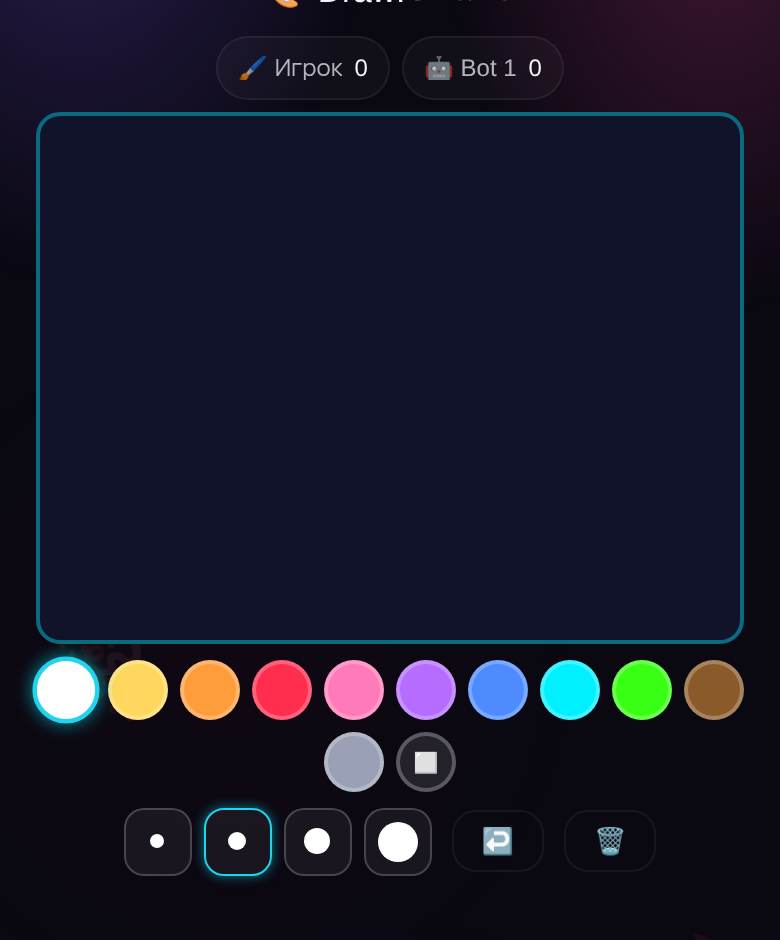
- Let color talk. Orange with black stripes says tiger before the head is done. Tools: 11 colors, four brush sizes, eraser, undo, clear.
- Draw actions with a stick figure. A figure plus a spray of dots reads as “sneezing”; motion lines sell “running”.
- No letters. The game can’t stop you writing on the canvas, but it ruins the round — agree up front.
- Guessers, read the blanks. Length rules out half the list; after the first hint letter you also see whether it’s two words.
- Learn from misses. “Dog… wolf… fox” from three players means the shape looks canine.
- Type phrases in full: “riding a bike”, not “bike”.
Pictioner vs. Doodle Chain
Doodle Chain is the drawing telephone game: everyone draws at once and a phrase mutates down the chain, and at the end everyone flips through the album and votes for the best moments. Pictioner is a guessing race — one artist, everyone else typing answers against the clock. For a word race without drawing, try Explain It!; for picture cards, Associations. Planning a remote hangout? See our games for video calls.