When nobody at the party wants to be the host
Every party has that one person who ends up explaining the rules, tracking the score and never actually playing. Good news: a timer can do the job instead.
Why host-driven games fall apart
The “one person reads the prompts, everyone else plays” setup breaks for three predictable reasons. One: the host doesn't play. Twenty minutes in they're watching their friends laugh and realising they signed up for a shift. Two: the host gets tired. The voice goes, the bits repeat, the pace sags. Three: the moment the host walks off for a drink, the whole game stops, because all of its machinery lived in their head.
There's a political problem too. A human host has to rule on borderline answers, and every ruling looks like personal taste. “Come on, that's basically right” — and now you've spent forty seconds debating whether penguin counts under B for birds that fly.
Mechanics that run without anyone in charge
A game runs itself when the rules are enforced by the system rather than by a person. In practice that's four things:
- A timer. A hard 60–90 seconds replaces “okay, hurry up” and offends nobody.
- Automatic scoring. No arguments about who owes whom a point, no rounds forgotten halfway through.
- Rotating roles. When the storyteller, drawer or judge changes automatically every turn, the role stops being a chore.
- An independent judge. A table vote or an AI verdict takes a real human off the hook for being the arbiter of taste.
A fifth, less obvious one: joining has to take a single action. If a game needs a download and an account, someone will get stuck and your evening opens with tech support. A link or a four-letter code in the group chat, and everyone's in within a minute. More on that format in the guide to playing with friends online.
Six modes that need no host
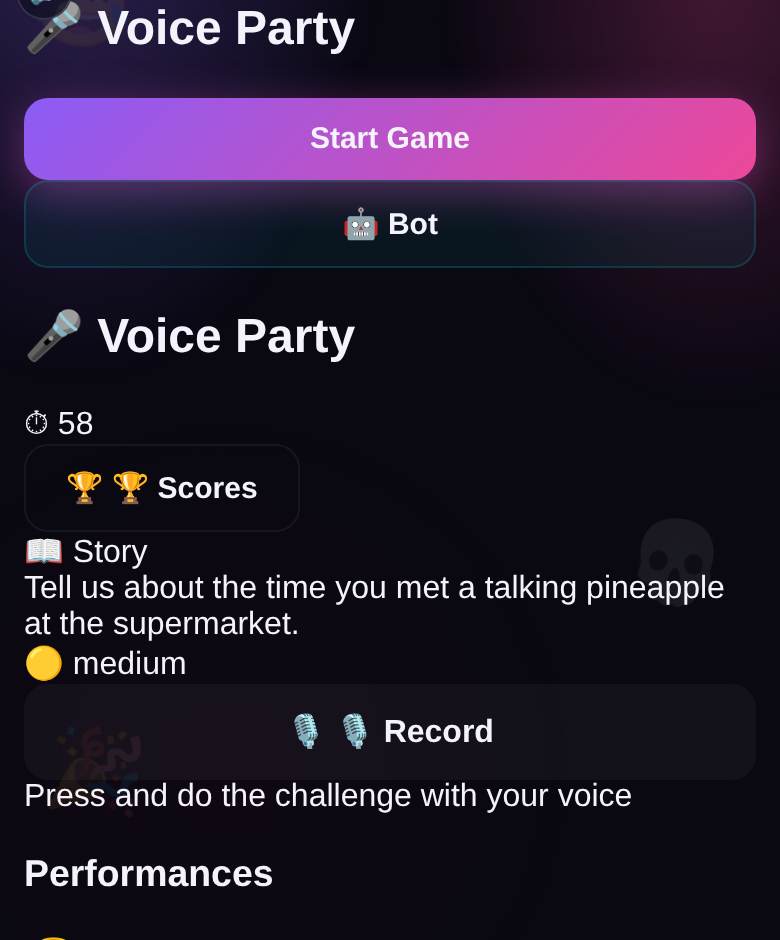
- AI Voice Party — voice challenges scored by an AI. Exactly the case where the judge has no favourites and takes no offence. Works great as a warm-up, because the first ridiculous voice breaks the ice for everyone.
- Meme Party — a Cards Against Humanity-style game built out of memes. The judge rotates every round, so the “person who decides” job goes around the table.
- Basta! — one letter, five categories, type faster than everyone else. Timer and scoring are fully automatic, and there's nothing to argue about because duplicate answers are cut by rule, not by mood.
- Pictioner — Pictionary with your finger: one person draws, everyone else guesses in chat. The turn passes on its own and needs no explaining.
- AI Game Factory — describe a game in one sentence and the AI builds a mini-game out of it. Priceless when the group announces they've played everything already.
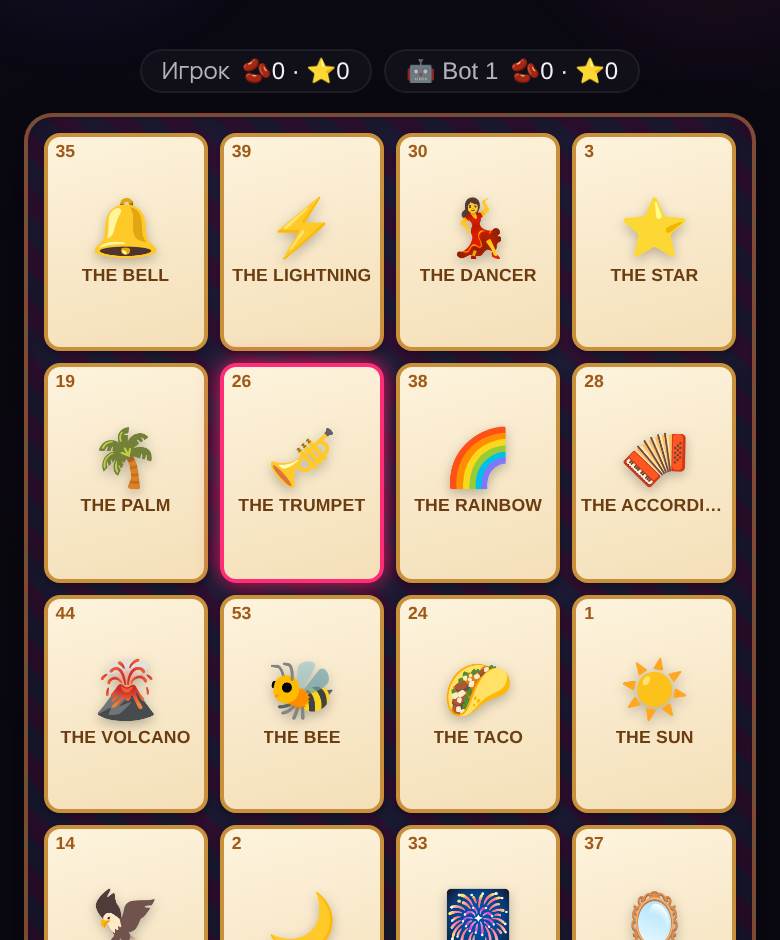
- Lotería — Mexican picture bingo: the cards call themselves, players just tap. The ideal closer for a night when nobody wants to think anymore.
A two-hour party plan
- 0:00–0:25, warm-up. AI Voice Party or Lotería. Low barrier, plenty of laughing, nobody obliged to be witty. People trickle in and you're not waiting on anyone.
- 0:25–1:20, main block. Meme Party and Basta!, two rounds of each. This is where the evening's energy lives: competitive, but nobody is eliminated and nobody sits idle.
- 1:20–1:45, creative block. Pictioner or AI Game Factory. By now the shyness is gone and people will happily draw a terrible cat in front of witnesses.
- 1:45–2:00, wind-down. Something calm and short — Lotería, or a board game on a phone. An evening should slow down at the end, not just stop.
Take a five-minute break between blocks. Games without pauses burn people out exactly like hosts without days off.
Bringing the quiet people in
What blocks a shy player isn't the game, it's failing in public. So start with mechanics where answers are typed rather than performed — in Basta! and Meme Party a person participates fully without ever standing alone against the room.
The second trick is voting instead of judging. When the round winner is picked by the table rather than by one named person, losing stops feeling personal. And the third: never make anyone explain their answer. “What I meant was…” should be a right, not a duty.
Dealing with latecomers
Latecomers are what kills an evening when a game demands a full roster. So pick short modes and keep the link handy: while a match is running the room is closed to new players, but a match is ten to twenty minutes. Someone shows up at 9:40, watches the end of the current game, and walks into the lobby on the same link for the next one.
If a game has a minimum player count and half the group is still in transit, add bots and start anyway. By the next game the real people have arrived — the host drops the bots from the lobby with one tap — and you skip the twenty-minute debate about whether to wait for Sam. For the ones still on their way, turn-based games on a phone are a good call — we rounded those up in the piece on board games on your phone.
🎤 Play AI Voice Party right now
10 seconds from click to game. No sign-up, nothing to install.
Play free now