What durak is and why Russians grow up on it
Durak is the most popular card game in Russia and across the former Soviet Union — kids learn it at the dacha, in school yards and on overnight trains. The name means “fool”, and that is the twist: nobody wins, one player loses. Everyone tries to get rid of their cards; the last one still holding some is the durak.
Every turn is a small battle: one player attacks, another must beat the card, the rest can pile on. It uses 36 cards — a standard deck without the 2s through 5s and jokers — and a game takes about ten minutes.
Durak rules in short (our podkidnoy version)
- Everyone gets 6 cards. The bottom card of the deck lies face up: its suit is trump for the whole game, and it is the last card drawn.
- The player with the lowest trump attacks first with any card. The next player around the table defends.
- The defender beats a card with a higher card of the same suit, or with any trump. A trump only falls to a higher trump.
- Anyone except the defender can add cards, but only ranks already on the table — attack or defense cards both count.
- All cards beaten and nobody adds more? The pile is discarded and the defender attacks next.
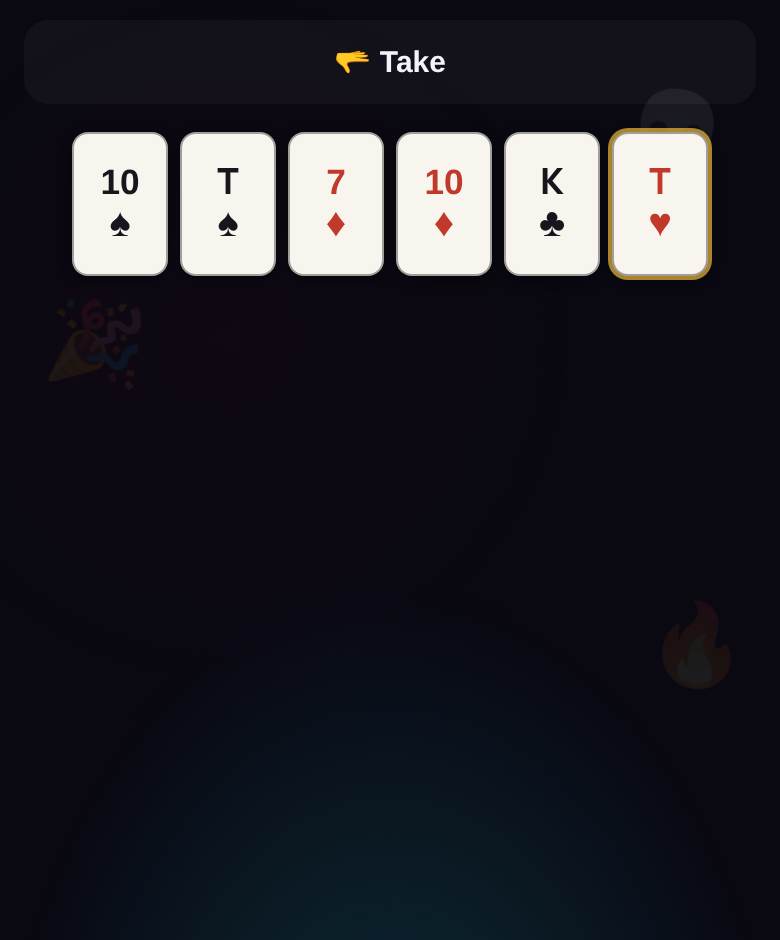
- Can’t or won’t defend? Press “Take”. Others may still add cards, then you pick up the whole table and skip your attack.
- After each round everyone draws back up to 6, attacker first, defender last. Once the deck is empty, players with no cards are out. The last one holding cards is the fool.
Worked examples and the empty-deck endgame are in our durak rules guide.
How to play durak online free with friends
- Pick Durak and create a room.
- Text the link to your group, or read out the 4-character room code (letters and digits).
- Friends open it on a phone or laptop and type a nickname. No account, no download.
- Short on people? The host adds bots. A table seats 2 to 6, any mix of humans and bots.
Every action has a 45-second clock. If someone stalls, the game moves for them: the attacker plays their lowest card, the defender takes, the others pass. Refreshed the page or lost Wi-Fi? The same browser puts you back at the table with your hand.
The host can start a rematch, and scores carry over: one point for everyone who avoided being the fool. One-on-one durak is Elo-rated — against a friend or a bot, which moves your rating more slowly — with leagues from Bronze to Legend on the leaderboard. With 3 to 8 people, run a tournament of durak duels.
Variants: what we play and what we don’t
We play podkidnoy (“throw-in”) durak only; the lobby has no rule options.
- No transfer durak (perevodnoy). In that variant the defender can pass the attack on by laying a card of the same rank. Here the defender can only beat or take.
- No 2-vs-2 teams and no “cheating” variant — everyone plays for themselves.
- Everyone may add cards, not only the defender’s neighbors.
- Attack limit: 5 cards in the first round, 6 after that, never more than the defender holds.
- Ties exist: if the last two players run out at the same moment, there is no fool.
Strategy tips for beginners
- Save trumps while the deck is thick; beat with plain cards and keep small trumps for the endgame.
- If you are going to take, take right away — folding on the third card means picking up your own defenders too.
- Watch the face-up trump and work out who will draw it last — that player gets an extra trump for the endgame.
- With six players the whole deck is dealt at once and nobody draws, so count cards from the first move.
- Bots never pile on trumps or cards above a queen while the deck lasts, so a quiet bot may still hold an ace.
Like trick-taking? Try Hearts. Want something fast? OCHO!. For a classic duel, backgammon.